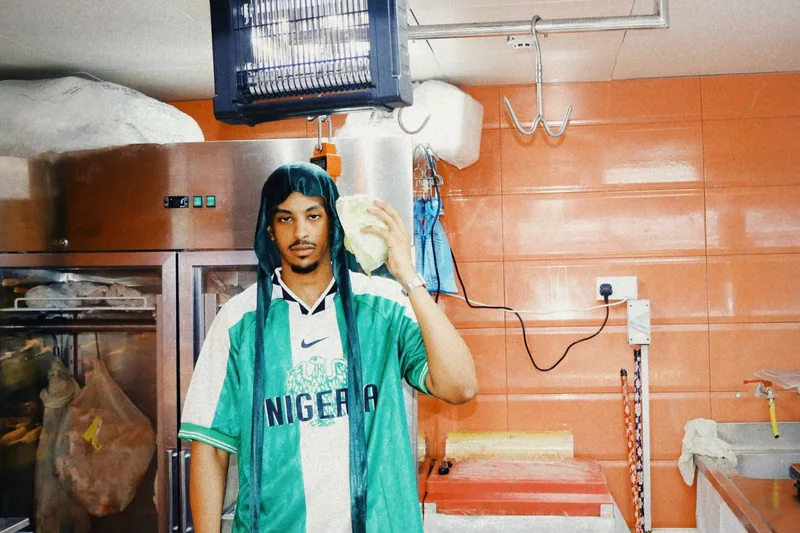
Ever spotted someone on the Paris metro or on a street in Brussels wearing an old Nigeria, Cameroon or Senegal jersey? That's no accident. And it's not just about football.
The retro African jersey has become something else. A message. A way of introducing yourself without saying a single word. And if you're part of the African diaspora, you know exactly what we mean.
Where does the trend come from?
It all started in the 90s and 2000s. African teams wore jerseys you couldn't find anywhere else. Bright colours, bold patterns, designs no European side would ever have dared. Nigeria 1994 with its green and white graphic prints. Cameroon with colours that really popped. Senegal 2002, the team that beat France, the reigning world champions.
Those jerseys left their mark on a generation. The kids who saw them on TV, or in the stands with their parents, are adults now. And they want to get back a piece of that era.
The vintage African jersey has become a collector's item. An object of memory. A link between the past and the present.
Why the African diaspora wears these jerseys
When you grow up far from the country your family comes from, you look for ways to stay connected. Music, food, language. And clothes too.
Wearing your national team's jersey is a statement that's simple and powerful at the same time. It says where you're from. It says you haven't forgotten. And in a European city where you rarely come across anything that reminds you of your roots, that jersey becomes almost a suit of armour.
This isn't passive nostalgia. It's a statement of identity. Active, visible, owned.
And the more years go by, the more these jerseys are worth. Not just in money. In sentiment. In culture.
The African jersey as a political and cultural act
We should also say what everyone thinks but doesn't always say out loud: wearing an African jersey in Europe is sometimes an act of quiet resistance.
African culture was looked down on for a long time. So wearing a Gabon, Mali or Ivory Coast jersey on a Paris street says that this culture has value. That it deserves to be seen. That it's beautiful.
The African football jersey has become a carrier of pride. Like wax print, like the boubou, like Afrobeat. It's one of the signs that say: we're here, we're proud, and we don't apologise for who we are.
The global vintage jersey phenomenon
This movement isn't limited to Africa. All over the world, vintage jerseys have become fashion pieces in their own right. You see them at fashion weeks, in music videos, all over social media.
But African jerseys from the 90s and 2000s have something special. They never got the media exposure of the European clubs. They were rare. Hard to find. And that rarity made them even more desirable.
Today, an original Nigeria 1994 jersey sells for several hundred euros on resale sites. An original Gabon jersey from the 2000s is impossible to find. These objects have become relics.
That's where brands like LMTE come in. Not to copy. To honour. To put designs that deserve to be seen back into circulation, with a quality and an attention to detail that respect the original.
The Azingo jersey and Gabonese pride
The Azingo jersey of the Gabon Panthers is part of that story. It's a tribute jersey, inspired by the 2000s era, wearing the colours of the Gabonese flag and the name of one of the country's most iconic lakes.
For Gabonese people in the diaspora, it's a way to reconnect. To carry a piece of their country's history on their shoulders. To tell others, without a word, where they come from.
For people discovering Gabon or African football, it's a way into a rich culture they don't yet know well enough.
So what does wearing an African jersey mean today?
It's not just a fashion choice. It's a cultural gesture. A way of passing something on. A way of keeping a shared memory alive.
Every generation has its symbols. For a lot of Africans in the diaspora, the national team's retro jersey is one of them. Simple, universal, full of meaning.
And if you want to wear a piece of that history, the Azingo jersey is made for you.